Why Does Primal Movement Get Harder the Moment You Put Shoes Back On?
Quick Answer: Primal movement relies heavily on foot sensory feedback and toe articulation, and a cushioned shoe removes both. Your foot has thousands of nerve endings that tell your brain about the ground; a thick sole muffles those signals, and a stiff toe box stops your toes from gripping and splaying. The result is worse balance, slower corrections, and a foot that cannot participate in the movement — which shows up as clumsiness everywhere above the ankle.
Barefoot on the mat: your deep squat feels stable, your crawl feels connected, your transitions feel smooth.
Same session in trainers: you wobble, your crawl feels heavy, and you cannot figure out why.
Nothing about your strength changed in the ninety seconds it took to lace up.
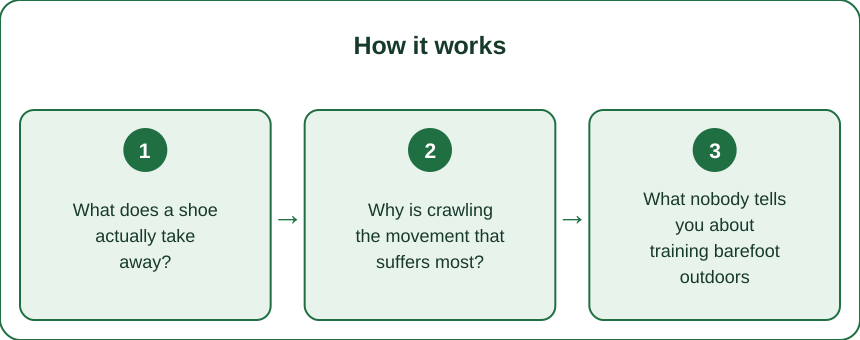
What does a shoe actually take away?
Two separate things, and they fail in different ways.
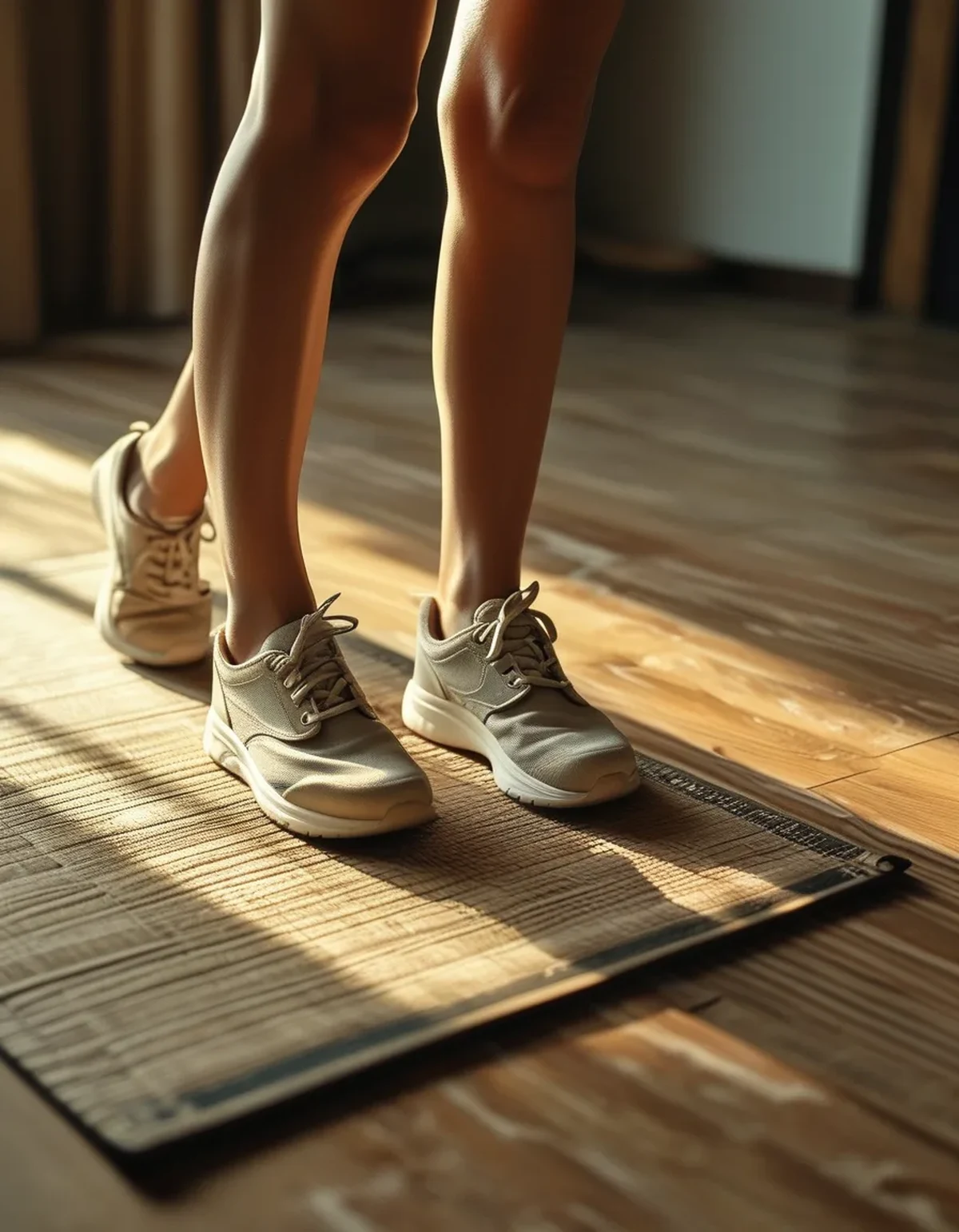
Sensory information. The sole of your foot is one of the most nerve-dense surfaces on your body, comparable to your hands. It reports pressure, texture, slope, and temperature continuously, and your balance system uses that stream to make constant micro-corrections you never consciously notice. A thick, soft sole does not block this entirely, but it blurs it — like listening to a conversation through a wall. You still get the gist. You lose the detail.
Mechanical participation. Your toes are supposed to splay, grip, and push. In a normal trainer with a tapered toe box and a stiff forefoot, they can do almost none of that. Your foot goes from an active, adaptive structure to a passive platform.
In most gym exercises this barely matters, because your foot is stationary and your base is wide. In primal movement it matters enormously, because your base is constantly changing and your foot is frequently the thing negotiating the change.
That is why the difference is so much more obvious in crawling and ground work than it is in a squat rack.
Why is crawling the movement that suffers most?
Crawling puts your foot in the one position where a shoe is maximally in the way: dorsiflexed, weight on the ball of the foot, toes extended and gripping.
A stiff forefoot fights that position directly. The shoe wants to stay straight and your foot needs to bend. So instead of your toes doing the pushing, the sole of the shoe skids, and you compensate by driving more from the hips and pulling more from the shoulders.
That compensation is why the same crawl leaves your shoulders and neck far more tired in shoes. The work did not disappear — it moved upstream to muscles less suited to it.
The grip issue compounds it. A barefoot foot on a wooden floor has genuine friction and can push directly. A foam sole on the same floor slides, so part of every push is lost to slip, and your body adds tension everywhere to stabilize against a base it does not trust.
This is also why crawling feels different on carpet versus hard floor in the first place — you are changing the friction and the sensory texture at once.
What nobody tells you about training barefoot outdoors
Everybody says go barefoot. Nobody mentions that outdoor barefoot and indoor barefoot are close to different skills.
Indoors you have a flat, predictable, uniform, temperature-stable surface. Your foot has almost nothing to adapt to, which means barefoot indoors mostly gives you back the sensory channel without adding much demand.
Outdoors on grass or dirt, every step is a different surface angle, a different firmness, and a different texture. That is genuinely valuable — it is the load your foot evolved for — but it is also a real training stimulus that your feet have not experienced in years. People go from an indoor barefoot practice straight to twenty minutes of outdoor ground work and end up with sore arches and tender heels for three days.
Ramp it like anything else. Five minutes outdoors, on a soft even surface like a lawn, once or twice a week. Add time before you add terrain difficulty. Gravel and uneven ground come later, after your feet have several weeks of grass behind them.
Also worth knowing: late summer is the best window to start, because the ground is warm and dry. Cold ground stiffens tissue and removes some of the sensory benefit you came for, so if you want an outdoor barefoot practice this year, starting it in late August rather than October is genuinely easier.
If I have to wear shoes, what actually helps?
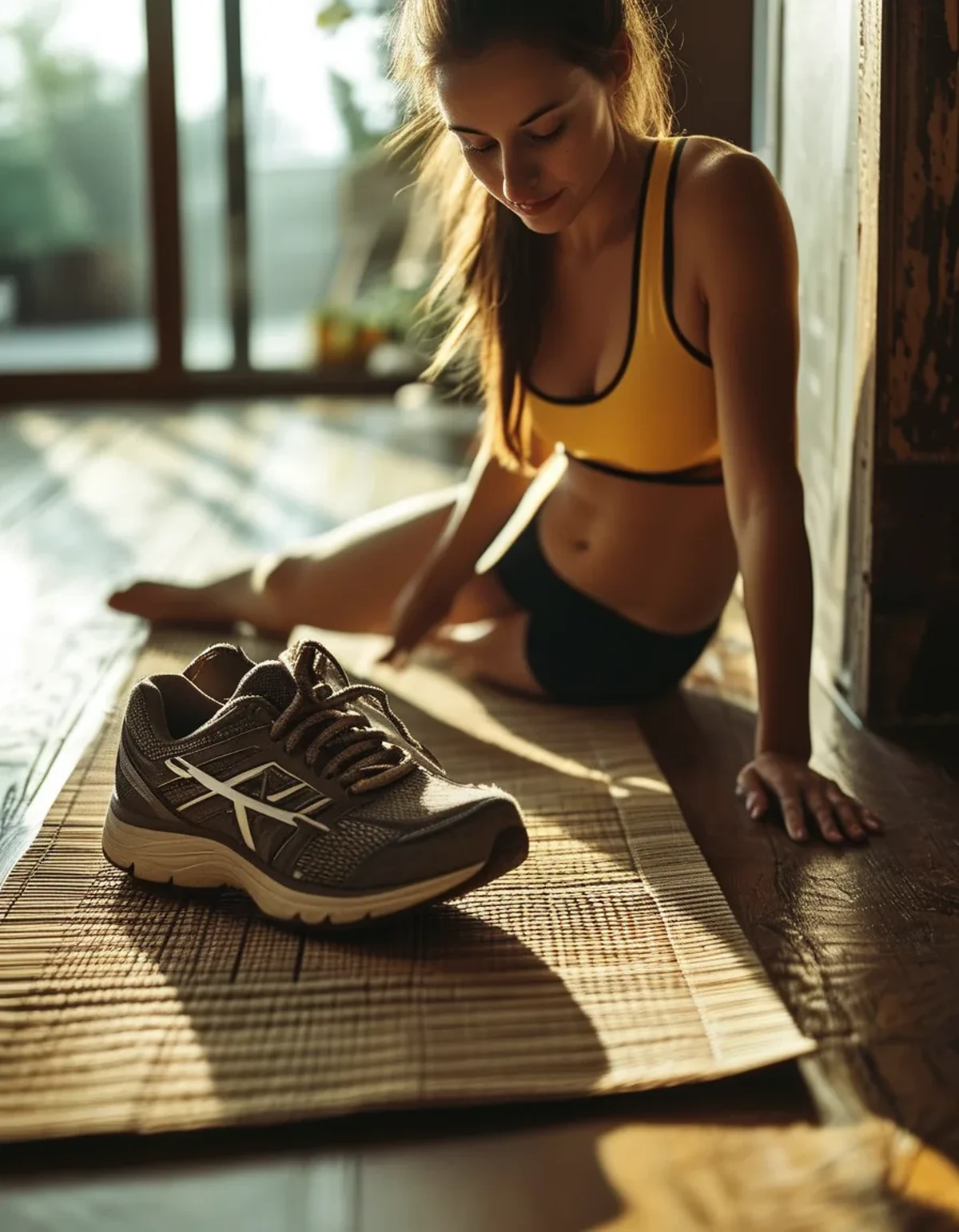
You will not always have a bare floor available, and gym rules often make shoes mandatory. The good news is that the two problems have identifiable fixes.
Look for, in order of importance:
- A wide toe box. This restores toe splay and grip, and it is the single most valuable feature. It matters more than the sole.
- A flexible forefoot. Hold the shoe at heel and toe and twist. If it barely bends, it will fight every crawl and every ground transition.
- A thin sole. More ground feel means more usable sensory information. You do not need zero — thin is enough.
- Low or zero drop. A raised heel changes your ankle position in every ground-based position, and in deep squats it hides the ankle range you were trying to build.
What matters least: cushioning, support, and brand. Those are running shoe priorities, and running is a different problem.
A practical middle path is to keep one cheap flexible pair specifically for ground work. It does not need to be an expensive minimalist shoe. A thin canvas shoe with a roomy front does most of the job.
Does going barefoot make the training easier or harder?
Both, and the split is useful to understand.
Easier: balance, coordination, transitions, and anything requiring fine control. You have more information, so you correct faster and with less effort. Deep squat depth often improves immediately, purely from ankle position and sensory feedback.
Harder: the tissue demand on your feet and calves. Barefoot work loads your arch, your intrinsic foot muscles, and your calf complex in ways a supportive shoe has been covering for. That work is the point, and it is also why your feet ache after your first few barefoot sessions when nothing above the ankle is sore.
The common mistake is reading that foot fatigue as a sign that barefoot is bad for you. It is the same signal you would get from any new exercise — an untrained tissue being asked to work.
Expect roughly four to six weeks before barefoot sessions stop leaving your feet tired. If you are still sore at eight weeks, you ramped too fast, not too slow.
How should this change what you actually do this week?
Three changes, ordered by value.
Take your shoes off for the ground portion. Not the whole session, just the crawling, squatting, and transitional work. That is where the shoe costs you most and where the floor is usually clean and flat anyway.
Add two minutes of toe work. Toe splays, toe lifts one at a time, and a slow short-foot exercise. This is the least interesting thing in the article and the one that most reliably changes how the rest of it feels. Your toes have been in a tapered box for decades and they need reintroducing to the job.
Notice which movements changed most. The ones that improve most barefoot are the ones most dependent on foot feedback, which tells you where your foot has the most to relearn. For most people it is the deep squat and any crawl variant that involves a direction change.
And keep the honest framing: this is not an argument that shoes are bad. It is an argument that a shoe designed to protect and cushion is, by design, removing exactly the inputs that ground-based movement runs on. Different tool, different job.
FAQ: Shoes and Ground Movement, Answered
Should I do all my training barefoot now?
No. Running, jumping, and heavy loaded work on hard surfaces have real impact and abrasion demands that a shoe handles well. Ground movement, mobility, and balance work are where barefoot has the clearest advantage. Match the tool to the task.
Are socks a good middle ground?
Grip socks, yes — they keep most of the sensory benefit and add friction on slippery floors. Regular socks are worse than either option, because you lose sensory detail and add slip at the same time.
My gym requires shoes. Anything else I can do?
Thin flexible shoes with a wide toe box get you most of the way. Beyond that, do your barefoot work at home for ten minutes on non-gym days — the adaptation transfers, even if the session does not.
Why do my calves get sore from barefoot work specifically?
Without a heel lift, your calf and Achilles work through a longer range in every position. That is a genuine new load. It is also, over time, exactly the adaptation that makes deep squats and floor sitting more comfortable.
TL;DR:
- A shoe removes sensory information from your sole and stops your toes from splaying and gripping, and primal movement depends on both.
- Crawling suffers most because it demands a bent, gripping forefoot that a stiff sole actively fights.
- The extra shoulder and neck fatigue in shod crawling is compensation for a foot that cannot push.
- Outdoor barefoot is a genuinely different load from indoor barefoot — ramp it over weeks, and late summer is the easiest time to start.
- If shoes are mandatory: wide toe box first, flexible forefoot second, thin sole third. Cushioning matters least.
The simplest version of all of this is to take your shoes off for the ground-based part of your session and add two minutes of toe work. Neither costs anything, both change how the session feels within a couple of weeks, and together they give your feet back a job they have not been asked to do in a very long time.
Keep Reading
This article is for general informational and styling purposes only. Fit, sizing, and product availability may vary.