Adding Primal Movement to Your Daily Routine (Move Like You're Built To)
Modern life has us sitting in chairs and moving in straight lines — but our bodies are built for squatting, crawling, hanging and moving in all directions. Primal movement brings that natural range back, and it is easy to weave into your day. Here is what primal movement is, why it helps, and how to add it to your routine.

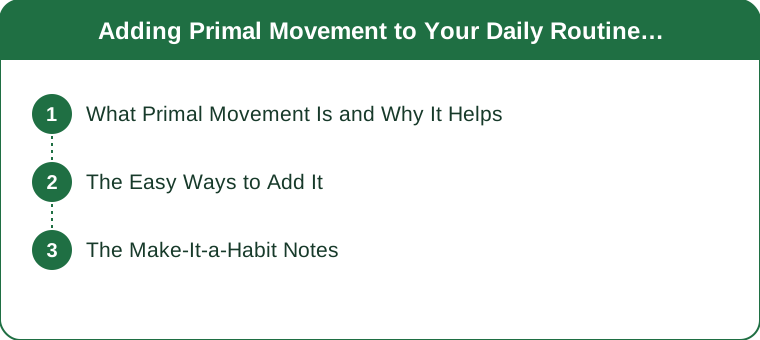
What Primal Movement Is and Why It Helps
Moving like you’re built to: the the-natural-human-movements (the primal movement being the natural patterns — squatting, crawling, hanging, ground-sitting — humans are built for from the primal-movement logic — the natural-patterns), the the-counters-modern-stiffness (the it countering the stiffness of chairs and sedentary life from the desk-workers logic — the counter-the-sitting), the the-mobility-and-strength (the primal movement building mobility, strength and body control from the primal-movement logic — the the-mobility-and-strength), the the-joint-health-and-range (the restoring range of motion the modern lifestyle loses from the deep-squat logic — the reclaim-the-range), the the-functional-and-accessible (the functional movement needing no equipment from the primal-movement logic — the equipment-free), and the reframe (the primal movement as reclaiming the natural movements our bodies are built for — countering modern stiffness with mobility, strength and range, no equipment needed).

The Easy Ways to Add It
Weaving it in: the the-deep-squatting (the sitting in a deep squat, building the mobility most people lose from the deep-squat logic — the the-deep-squat), the the-ground-sitting (the sitting on the floor in various positions instead of always a chair from the ground-sitting logic — the get-on-the-floor), the the-crawling (the crawling patterns for strength and coordination from the crawling logic — the the-crawl), the the-hanging (the hanging from a bar for shoulder health and grip from the hanging logic — the the-hang), the the-move-in-all-directions (the moving in all planes, not just straight lines — the all-directions), the the-primal-movement-breaks (the short primal movement breaks through the day, especially for desk workers from the desk-workers logic — the the-movement-breaks), the the-barefoot-and-grounded (the barefoot time for foot and ground connection from the barefoot logic — the the-barefoot), and the the-start-simple (the starting with a few easy movements from the primal-movement logic — the start-simple).
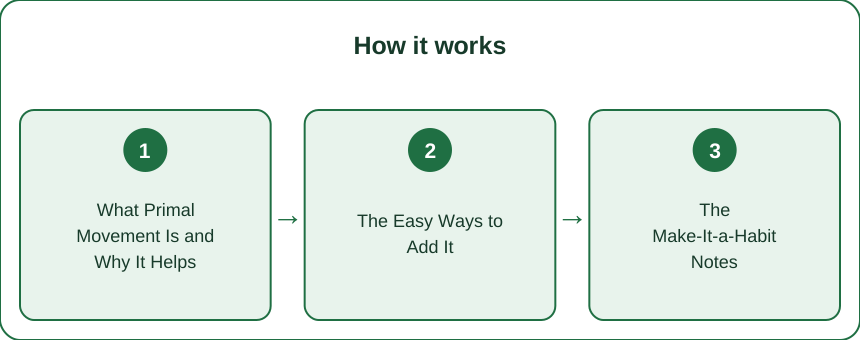
The Make-It-a-Habit Notes
Building the habit: the the-weave-into-daily-life (the adding primal movement into everyday moments, not a separate workout from the desk-workers logic — the weave-it-in), the the-anchor-to-cues (the ground-sitting while watching TV, squatting on a break from the ground-sitting logic — the the-cues), the the-start-small-and-build (the a few movements to start, building range over time from the deep-squat logic — the start-small), the the-consistency (the a little often building mobility over time from the primal-movement logic — the little-and-often), the the-desk-worker-breaks (the primal movement breaks countering desk sitting from the desk-workers logic — the the-desk-antidote), the the-be-patient-with-mobility (the mobility like the deep squat returning gradually from the deep-squat logic — the give-it-time), the the-make-it-play (the keeping it playful and exploratory from the primal-movement logic — the make-it-play), and the frame (the primal movement as natural squatting, crawling, hanging and ground-sitting woven into daily life and built gradually — moving like you’re built to. Add deep squats, ground-sitting, crawling and hanging into everyday moments, anchor them to cues, and build your range patiently).
Modern life has us sitting in chairs and moving in straight lines — but our bodies are built for squatting, crawling, hanging and moving in all directions. Primal movement brings that natural range back: it is the natural patterns humans are built for, it counters modern stiffness, it builds mobility, strength and body control, it restores lost range of motion, and it needs no equipment. Add it easily with deep squatting, ground-sitting in various positions, crawling patterns, hanging from a bar, moving in all directions, primal movement breaks (especially for desk workers), and barefoot time — starting simple. Make it a habit by weaving it into daily life rather than a separate workout, anchoring movements to cues, starting small and building, staying consistent, using it to counter desk sitting, being patient with mobility, and keeping it playful. Moving like you’re built to.
Keep Reading
This article is for general informational and styling purposes only. Fit, sizing, and product availability may vary.