The Floor-Sitting TV Swap: Recover Ancestral Mobility Without Adding a Workout
Quick Answer: Floor-sitting during TV time is stealth mobility training: cross-legged, side-sit, long-sit, and squat positions each load hips, ankles, and spine through ranges a couch never asks for — and every get-up is a mini strength rep of the sit-to-stand capacity that research links to healthy aging. Start with a cushion under your hips, rotate positions when they complain (that’s the system working), and let a season of shows rebuild what chairs quietly took.
Mobility routines fail for the same reason all add-on habits fail: they need new time. Floor-sitting needs zero — it’s the same show, the same snacks, the same hour, conducted eighteen inches lower, where your hips have to actually participate.

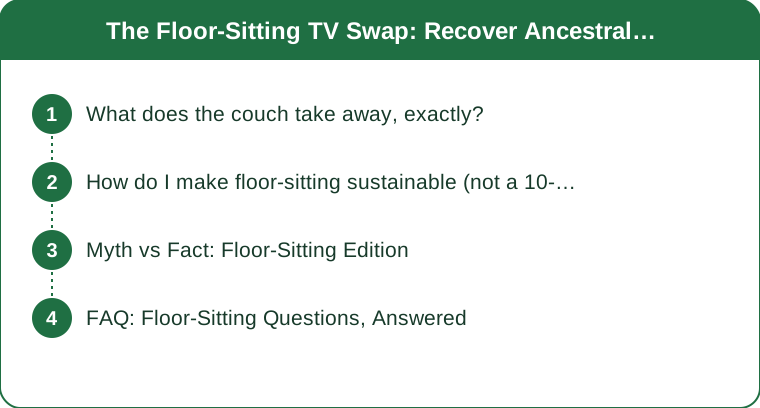
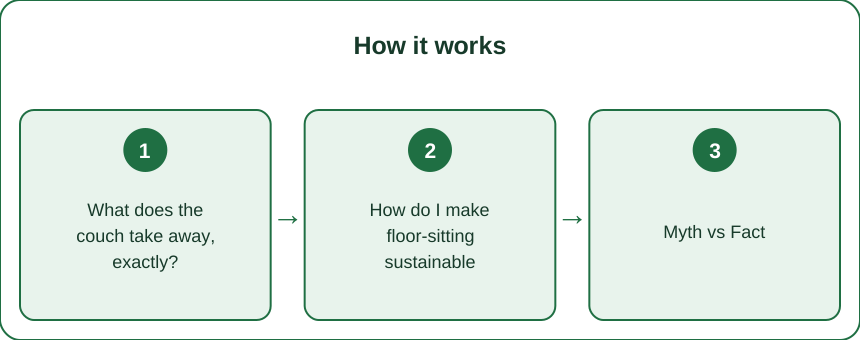
What does the couch take away, exactly?
A couch is a mobility-neutralizing machine: hips fixed at an easy 90 degrees, knees matching, ankles idle, spine outsourced to cushions. Comfortable — and completely demand-free, which is the problem. Joints hold the ranges they’re asked to visit, and the couch asks for exactly one.
The floor asks for a portfolio: cross-legged sitting demands hip external rotation; side-sitting demands internal rotation (the range modern hips lose first and complain about last); long-sitting stretches hamstrings and asks the spine to self-support; deep squat resting takes ankles and hips to end-range. Plus the transitions — every reposition and every stand-up is loaded movement through those ranges.
The aging connection is the quiet headline: the ease of getting down to and up from the floor (formalized in the sitting-rising test) tracks with healthspan in the research — not because floor skills are magic, but because they’re a composite readout of leg strength, balance, and joint range. The couch never tests it; the floor tests it every episode.
How do I make floor-sitting sustainable (not a 10-minute failure)?
The setup that changes everything: elevate your hips. A firm cushion, folded blanket, or yoga block under your sit bones tilts the pelvis forward, unlocks the slump, and roughly triples comfortable duration. Floor-sitting misery is mostly un-elevated hips — fix that first, always.
The rotation rule: discomfort after 5-15 minutes isn’t failure, it’s the cue — change positions. The menu: cross-legged (both sides — one will feel weirdly harder; that’s your asymmetry report), side-sit left and right, long-sit against the couch front (using it as a backrest is fully legal), kneeling/seiza with a cushion between heels and hips, and brief deep-squat visits during ad breaks. A 45-minute episode might tour five positions — that touring is the training.
The progression: week 1, one show on the floor with generous cushioning and the couch-backrest assist; weeks 2-4, less back support, longer holds, both sides equally; ongoing, lower cushions as hips open, plus the get-up rule — stand without hands when you can (each unassisted rise is the sit-to-stand rep the aging research keeps pointing at).
Joint issues, recent surgeries, or pain beyond stretch-discomfort: scale with more elevation and shorter bouts, and check with a professional. This is general information, not medical advice.

Myth vs Fact: Floor-Sitting Edition
Myth: Floor-sitting is bad for your knees. Fact: For healthy knees, varied floor positions are nutrition — cartilage and joint structures respond to movement through range. What aggravates is one extreme position held rigidly for an hour (the same crime the couch commits at a different angle). The rotation rule is the whole safety system. Existing knee conditions: scale and consult — deep flexion positions aren’t mandatory, they’re menu items.
Myth: You need to work up to lotus or you’re doing it wrong. Fact: Lotus is a flexibility flex, not a requirement — the mobility payload lives in the variety (external + internal rotation, flexion, extension), all available from beginner-friendly positions on a nice tall cushion. Side-sitting badly is worth more than avoiding it gracefully.
Myth: Discomfort means stop the whole practice. Fact: Position-change discomfort is the mechanism — muscles waking up to postural work the couch was doing for them. The distinction that matters: diffuse muscular tiredness (rotate and continue) versus sharp joint pain or numbness/tingling (adjust position, add height, and if persistent, get it looked at). Tingling feet = legs crossed too tight, not a mobility milestone.
The cultural footnote worth knowing: a large share of the world’s adults floor-sit daily for life — the ranges this rebuilds aren’t athletic ambitions, they’re factory settings.
FAQ: Floor-Sitting Questions, Answered
How long until my hips actually feel different?
Common timeline with near-daily show-length sessions: noticeably easier cross-legged sitting in 2-4 weeks, meaningful gains in side-sit tolerance and squat depth over 2-3 months. The get-up getting lighter arrives on its own schedule and is the best progress marker of the bunch.
Can I just do some positions and skip the uncomfortable ones?
You’ll gravitate to your easy ranges — everyone does — but the awkward positions ARE the prescription (they’re awkward because that range atrophied). Rule of thumb: every session includes at least a short visit to your two worst positions, cushioned as generously as needed.
Is this enough mobility work on its own?
For general-life hip/ankle/spine maintenance, a season of floor-sitting does remarkable work. Specific goals (deep squat for lifting, splits, sport demands) still want targeted training — think of floor-sitting as the baseline that makes everything else cheaper, not the whole program.
TL;DR:
- The couch asks joints for one easy angle; the floor asks for a portfolio — and every get-up is a strength rep the aging research cares about
- Cushion under hips first (it triples comfort), then rotate positions when they complain — the touring is the training
- Both sides, worst positions included, couch-as-backrest fully legal, stand without hands when possible
- Sharp pain or tingling = adjust, not endure; conditions = scale and consult
Same show, eighteen inches lower — a season finale’s worth of mobility you didn’t have to schedule. This is general information, not medical advice.
Keep Reading
This article is for general informational and styling purposes only. Fit, sizing, and product availability may vary.