Why Your Toes Have Forgotten How to Spread (And Why It Matters for Movement)
Quick Answer: Narrow, tapered modern shoes gradually compress the toes into a shape that limits natural splay (spreading), which reduces the foot’s base of support and its ability to generate stabilizing force — toe splay can be gradually restored through barefoot time, toe-spacer use, and specific mobility drills, though it takes consistent practice since the compression built up over years.
Most people assume their toe shape is just how their feet are built. In many cases, it’s actually shaped by decades of narrow footwear.

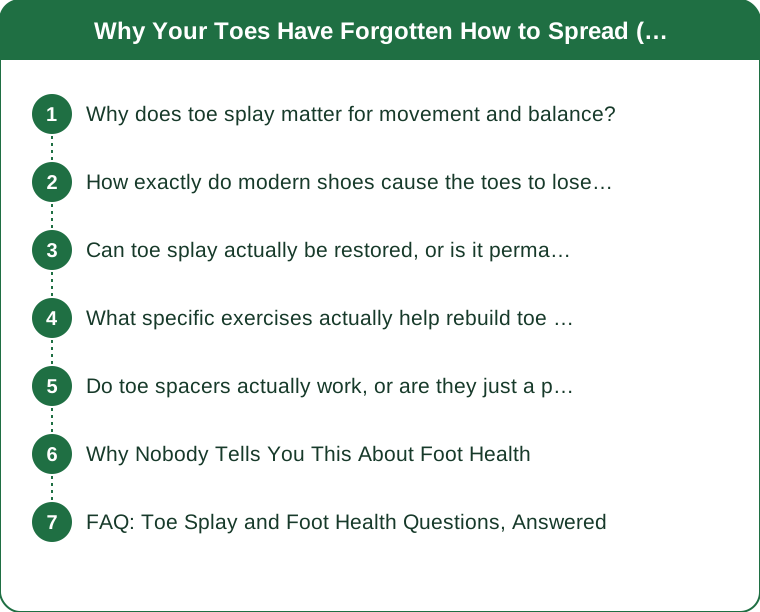
Why does toe splay matter for movement and balance?
A wider toe base increases the foot’s stable contact area with the ground, which directly improves balance during standing, walking, and especially single-leg or unstable-surface movement. Compressed toes shrink that base of support without most people noticing the tradeoff.
How exactly do modern shoes cause the toes to lose splay?
Tapered toe boxes physically compress the toes toward the center of the foot over years of daily wear, and the foot’s soft tissue and even some bone positioning gradually adapts to that compressed shape, similar to how any body part adapts to sustained positioning.
Can toe splay actually be restored, or is it permanent by adulthood?
It can be meaningfully restored in most people — consistent barefoot time, wide toe-box footwear, and specific spreading exercises gradually improve splay over months, though full restoration takes longer for people with decades of narrow-shoe wear versus someone who started young.

What specific exercises actually help rebuild toe splay?
Toe-spreading holds (actively spreading toes apart and holding for 10-20 seconds), picking up small objects with the toes, and short-toe-yoga routines all target the small intrinsic foot muscles responsible for active splay, which most footwear-dependent lifestyles leave chronically underused.
Do toe spacers actually work, or are they just a passive stretch?
They’re genuinely useful as a passive complement to active exercises, gently encouraging space between toes during rest or sleep, but they work best alongside active spreading exercises rather than as a standalone fix — passive stretching alone doesn’t build the muscle control needed to maintain splay during actual movement.
Why Nobody Tells You This About Foot Health
Foot and ankle injuries are often treated as isolated joint or ligament issues, when reduced toe splay and weak intrinsic foot muscles are frequently a contributing root cause — addressing footwear and foot mobility can meaningfully reduce recurring ankle or foot injury risk, not just address comfort.
FAQ: Toe Splay and Foot Health Questions, Answered
How long does it typically take to notice improved toe splay?
Most people notice some improvement within 6-8 weeks of consistent practice, with fuller changes over several months.
Are minimalist or barefoot shoes necessary for this, or just helpful?
They’re not strictly necessary but they significantly accelerate progress since they don’t recompress the toes the way tapered shoes do between exercise sessions.
Can toe splay work help with existing bunions?
It can help slow progression and improve comfort in early-stage cases, but established bunions (a structural bone deviation) generally need a podiatrist’s evaluation rather than exercise alone.
TL;DR:
- Wider toe splay increases the foot’s stable base of support for balance and movement
- Tapered modern shoes gradually compress toes into a narrower, less functional shape
- Splay can be restored through barefoot time, wide shoes, and active spreading exercises
- Toe spacers help passively but work best paired with active exercise, not alone
Try a nightly two-minute toe-spreading hold this week — it’s a small, low-effort habit that starts reversing years of compression from narrow footwear.
Keep Reading
This article is for general informational and styling purposes only. Fit, sizing, and product availability may vary.